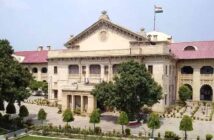
Gujarat High Court.
Vapi Municipality Corporation’s Arbitration Proceeding: A major legal battle over lake development in South Gujarat has taken a dramatic turn. The Gujarat High Court recently stepped in to halt a massive ₹100 crore arbitration proceeding against the Vapi Municipal Corporation (VMC).
The order, passed by Justice LS Pirzada, temporarily freezes proceedings that were being conducted before a sole arbitrator—former Bombay High Court Chief Justice KR Vyas.
Here is a breakdown of what the dispute is about, why the municipality fought back, and why the High Court decided to halt the clock.
The Core Conflict: What Went Wrong?
The dispute stems from lake development lease agreements involving three specific water bodies: Lakhamdev, Dungra, and Chala lakes.
A private company, Shashijit Infra Projects Ltd., initiated arbitration against the VMC (formerly the Vapi Nagarpalika) over these leases, mounting claims worth approximately ₹100 crore. However, VMC moved the High Court to stop the process, arguing that the entire arbitration setup was fundamentally flawed.
3 Key Reasons the High Court Halted the Arbitration
The VMC raised several critical legal objections that convinced the High Court that the matter required a much “closer examination”:
1. The “Unilateral” Appointment of the Arbitrator
VMC’s primary argument was that Shashijit Infra Projects Ltd. appointed the sole arbitrator entirely on its own, without the municipality’s consent. Under Indian arbitration law, unilateral appointments—where one party chooses the judge without the other’s agreement—are highly restricted to ensure neutrality. VMC argued this rendered the process legally untenable.
2. The Threat of an Ex Parte Ruling
The situation had reached a boiling point on June 2. The arbitrator had scheduled a hearing and warned VMC that if it failed to file its reply immediately, its right to defend itself would be shut down. VMC argued this aggressive timeline created a severe risk of an ex parte ruling (a decision made in their absence), denying them a fair trial.
3. Parallel Court Cases & Jurisdictional Clashes
VMC pointed out that the High Court is already hearing similar matters related to this dispute, with a crucial hearing scheduled for June 18. Furthermore, the civic body argued that because it is a notified public undertaking, this dispute should legally be decided by the Public Works Tribunal, not through private arbitration.
The Risk of Conflicting Verdicts: VMC warned that allowing a private arbitrator to pass judgment while the High Court was simultaneously examining the issue could lead to chaotic, conflicting outcomes.
READ: Section 138 NI Act Applies Only to Drawer of Cheque, Not Joint Account Holder: Allahabad HC
What the High Court Ordered
Taking note of the municipality’s arguments and the ticking clock on the June 2 deadline, Justice LS Pirzada issued a clear restraint:
The Freeze: The sole arbitrator has been directed not to proceed with the arbitration or pass any orders for the time being.
The Next Steps: The High Court issued official notices to the responding parties and has scheduled a comprehensive hearing immediately after the summer vacation on June 18.
The Legal Teams
For Vapi Municipal Corporation (VMC): Government Pleader Advocate GH Virk, along with advocate Jagrat Shah, advocate Chinmay M Gandhi, and advocate Nikita C Gandhi.
Opposing Parties: Shashijit Infra Projects Ltd. and the Sole Arbitrator (Retired Judge KR Vyas).
The Bottom Line: This case underscores a growing judicial trend in India: courts will aggressively step in if they feel private arbitration processes are being rushed, bypass mutual consent, or conflict with specialized public tribunals. All eyes are now on June 18 to see if the freeze becomes permanent.
DON’T MISS: Bar Council of India Probes Mamata Banerjee’s Legal Practice Status After Court Appearance
DON’T MISS: Lakshmikumaran & Sridharan acts on Futura Medtech’s investment in Rivarp Medical